


THE WILD HONEY STORY
Our honey is very rare, virgin forests where its harvesting takes place. The wide range of the mountainous altitude offer a rich diversity from a plethora of native plants in forest sites away from any human activity that could be detrimental to the environment. The main sources of nectar are the area’s plants such as a wild leaf, wild thyme, wild oregano, wild blackberry, oak, chestnut, pine and various thorns.


THE WILD HONEY STORY
Our honey is very rare, virgin forests where its harvesting takes place. The wide range of the mountainous altitude offer a rich diversity from a plethora of native plants in forest sites away from any human activity that could be detrimental to the environment. The main sources of nectar are the area’s plants such as a wild leaf, wild rose, wild oregano, wild blackberry, oak, chestnut, various thorns.

THE HARVEST
Our journey leads us to some of the most outlying and untouched forests at the foothills of Olympus. From April to November, we drive the bees into inaccessible territories and transport them every month, so that they obtain the excellent honeydew from the trees and plants.
Honey is extracted below 35 ° C, which is the usual temperature of the hive, with the result that all therapeutic enzymes and exquisite aromas remain intact. Honey is unfiltered to retain the beneficial residue of pollen and organic matter.
THE HARVEST
Our journey leads us to some of the most outlying and untouched forests at the foothills of Olympus. From April to November, we drive the bees into inaccessible territories and transport them every month, so that they obtain the excellent honeydew from the trees and plants.
Honey is extracted below 35 ° C, which is the usual temperature of the hive, with the result that all therapeutic enzymes and exquisite aromas remain intact. Honey is unfiltered to retain the beneficial residue of pollen and organic matter.

THE HARVEST
Our journey leads us to some of the most outlying and untouched forests at the foothills of Olympus. From April to November, we drive the bees into inaccessible territories and transport them every month, so that they obtain the excellent honeydew from the trees and plants.
Honey is extracted below 35 ° C, which is the usual temperature of the hive, with the result that all therapeutic enzymes and exquisite aromas remain intact. Honey is unfiltered to retain the beneficial residue of pollen and organic matter.


PACKAGING & ISO 22000:2018
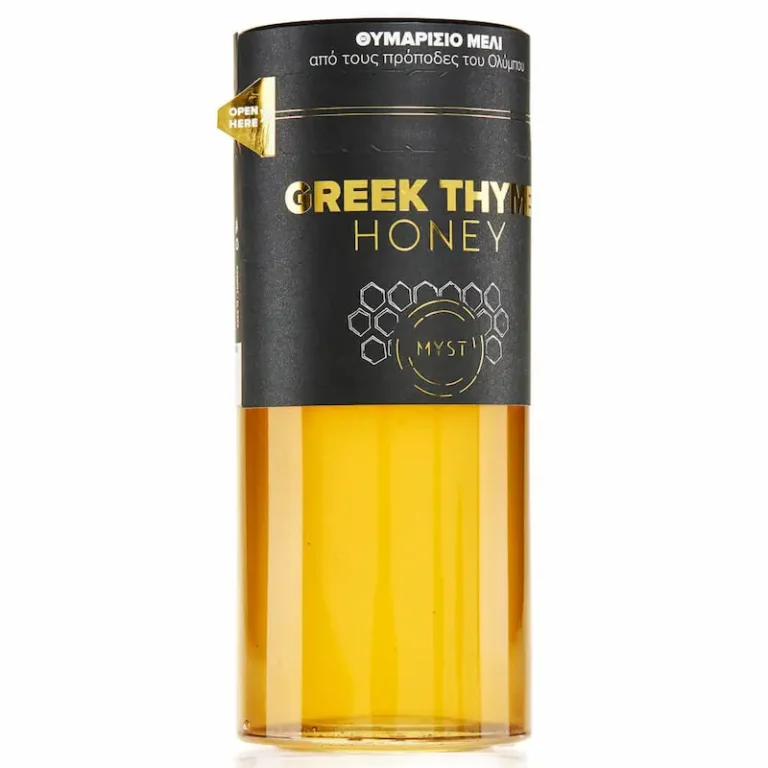
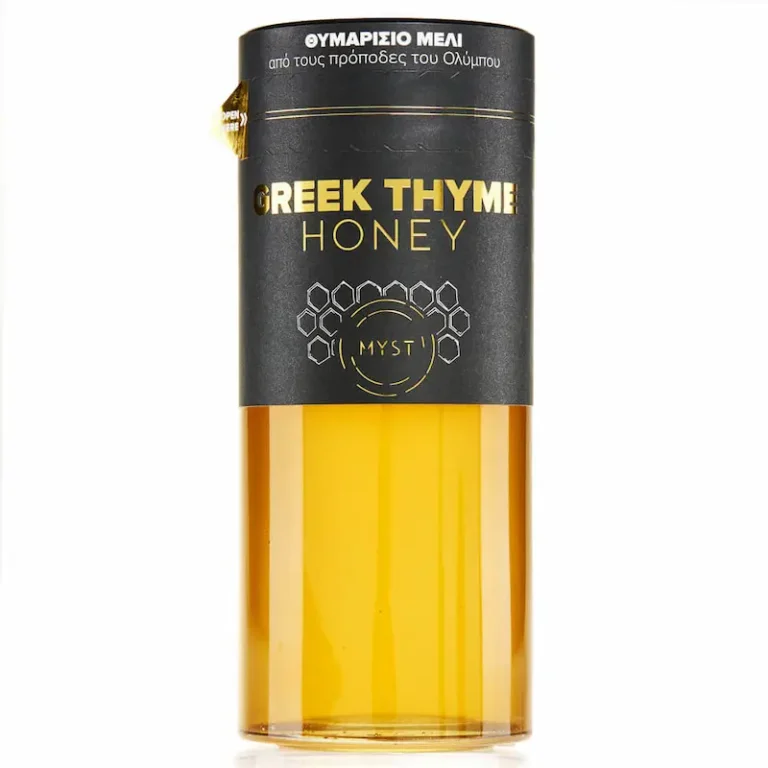
The outstanding packaging of MYST honey specifically designed to treat your aesthetics, sealing up the quality and retaining intact this precious treasure. With a main goal to revive and promote Greece’s ancient culinary heritage.
All the processes from harvesting to packaging made according to the principles of HACCP and ISO 22000:2018.

PACKAGING & ISO 22000:2018
The outstanding packaging of MYST honey specifically designed to treat your aesthetics, sealing up the quality and retaining intact this precious treasure. With a main goal to revive and promote Greece’s ancient culinary heritage.
All the processes from harvesting to packaging made according to the principles of HACCP and ISO 22000:2018.
PREMIUM HONEY

HONEY & HEALTH BENEFITS

A big source of antioxidants
Honey contains an array of plant chemicals that act as antioxidants. Some types of honey have as many antioxidants as fruits and vegetables. Antioxidants help to protect your body from cell damage due to free radicals.
Free radicals contribute to the ageing` process and may also contribute to the development of chronic diseases such as cancer and heart disease. Research shows that antioxidant compounds in honey called polyphenols may play a role in preventing heart disease.

Antibacterial and anti-fungal properties
Research has shown that honey can kill unwanted bacteria and fungus. It naturally contains hydrogen peroxide, an antiseptic. Its effectiveness as an antibacterial or anti-fungal varies depending on the honey, but it’s more than a folk remedy for these kinds of infections.

Heal wounds
Honey is used in medical settings to treat wounds because it’s been found to be an effective germ killer and also aids in tissue regeneration.

Phytonutrient Powerhouse
Phytonutrients are compounds found in plants that help protect the plant from harm. For example, some keep insects away or shield the plant from ultraviolet radiation.
The phytonutrients in honey are responsible for its antioxidant properties, as well as its antibacterial and anti-fungal power. They’re also thought to be the reason raw honey has shown immune-boosting and anticancer benefits.

Help for Digestive issues
Honey is sometimes used to treat digestive issues such as diarrhea, though there isn’t much research to show that it works. It’s proven to be effective as a treatment for Helicobacter pylori (H. pylori) bacteria, though, a common cause of stomach ulcers.It’s also a potent prebiotic, meaning it nourishes the good bacteria that live in the intestines, which are crucial not only for digestion but overall health.

Soothe a Sore Throat
Have a cold? Try a spoonful of honey. Honey is an old sore throat remedy. Add it to hot tea with lemon when a cold virus hits you.It also works as a cough suppressant. Research has suggested that honey is as effective as dextromethorphan, a common ingredient in over-the-counter cough medication. Just take one or two teaspoonfuls, straight.


